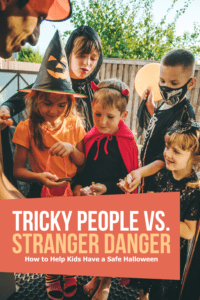
Halloween is often the best time of year for kids. It’s filled with costumes, candy, and the thrill of trick-or-treating. But as parents and caregivers, it’s natural to have concerns about safety, especially when it comes to what is commonly called “stranger danger.” How can we ensure our kids have a fun and safe Halloween experience despite these fears? Teaching kids the best course of action in a spooky situation can help put your mind at ease, even if it’s the “scariest” time of the year.
Stranger Danger vs. Tricky People
While Halloween is a time for fun, it’s also important to be aware of potential safety risks. You likely learned about “stranger danger” when you were a kid yourself – it’s a valid concern! Nowadays, though, it’s important to keep in mind that untrustworthy adults can come in all shapes and sizes – they’re, unfortunately, not just limited to strangers.
This is why rhetoric around “stranger danger” has changed in recent years; now, experts refer to untrustworthy folks as “tricky people.” Changing the language around “stranger danger” removes uncertainty and allows kids to voice their feelings in a safe environment if someone is making them feel uncomfortable.
Pattie Fitzgerald, the Founder of Safely Ever After, Inc., states that “It’s crucial we parents talk to our kids about what potentially harmful people might look like, do, or say. Because the truth is, they aren’t always big scary men. They could look like a sweet
grandpa. Or even a mom.”
So, what’s a kid to do? How can we – and our kids – enjoy Halloween if an untrustworthy adult could exist right in your own neighborhood? Below are some tips to remind your kids about before they begin their hunt for candy this year:
- Say, “No!”: Encourage kids to say, “No!” if they feel uncomfortable, even if it’s to an adult. Paying attention to your “Special Inner Voice” is key (i.e., teach your kiddos to trust their guts when it comes to “tricky people!”)
- Use Empowering Language: Telling kids that they’re the “boss of their own bodies” enables them to feel like they have the power to say no – they’re in charge!
- Create Check-Ins: Tell your kids to check in with you first before running off. Plan a trick-or- treating route in advance and stick to familiar neighborhoods. Avoid unfamiliar areas and houses that are not well-lit.
- Use Safety Gear: Equip kids with flashlights, glow sticks, or reflective tape to make them more visible to drivers. Remind them to stay on sidewalks and cross streets at designated crosswalks.
Boo-tiful Bonding
Even though we want to be aware of “tricky people,” it’s still important to build out those trusted relationships. Getting the community involved in Halloween planning can also enhance safety. Organize a neighborhood Halloween event where families can come together in a central location for trick-or-treating, games, and activities. This controlled environment can provide a safer alternative to traditional door-to-door trick-or-treating.
Encouraging neighbors to participate in creating a safe and fun Halloween atmosphere can make a big difference. When everyone works together, kids can enjoy the thrill of Halloween while parents feel more at ease.
Trick-or-Treat Yo'Self!
Halloween is a time for fun, excitement, and community spirit. By taking a few simple precautions and fostering an open dialogue about safety, parents can help ensure their kids have a memorable and safe trick-or-treating experience. Remember, it’s all about striking the right balance between enjoying the holiday and staying aware of potential risks.
Happy Halloween!